Pain Score Tracking for Personal Injury Cases
Monitor client recovery and build stronger cases with accurate pain documentation.
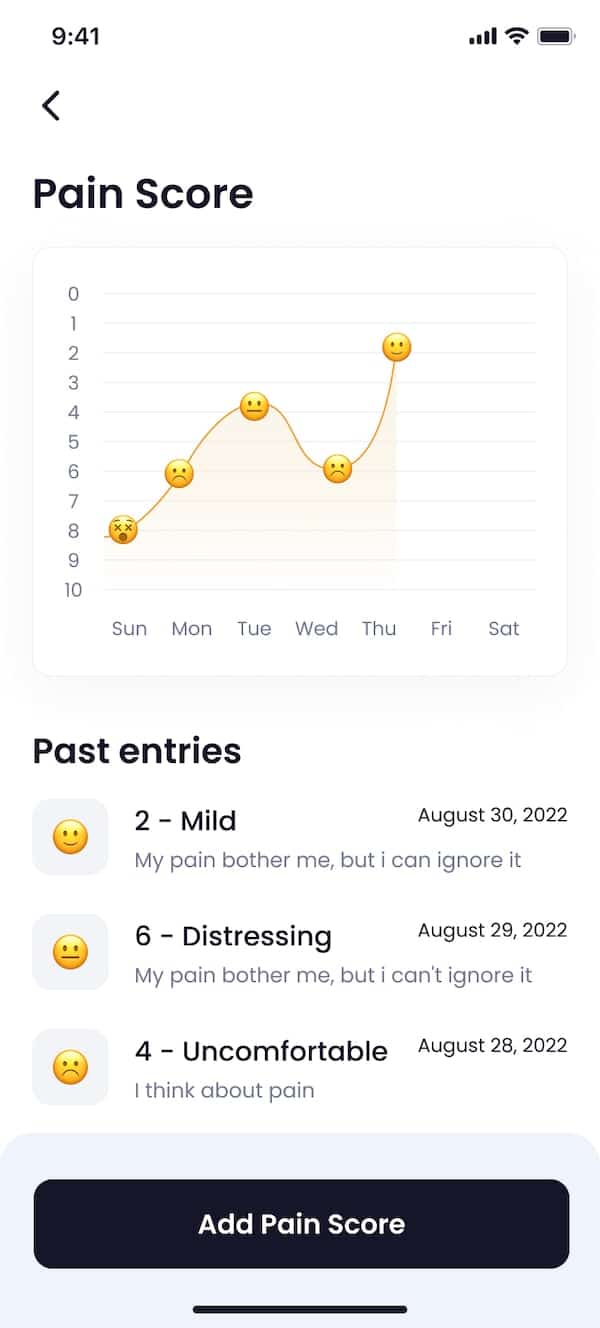
Quilia's pain score tracking lets clients record daily pain levels. This gives attorneys valuable data to support personal injury cases. The systematic approach ensures accurate documentation. It helps demonstrate how injuries impact clients' daily lives.
BrittanyQuilia App User
Providing information to the attorney.
Clients report pain scores to their attorney. This provides valuable information about treatment effectiveness. If a client's pain score isn't improving or is getting worse, it may indicate the treatment isn't working. By tracking pain scores over time, attorneys can use this information to advocate for clients. They ensure clients receive the best possible care.
Educational exercise for the client.
The pain score feature also works as an educational exercise for clients. By logging their pain score regularly, clients become more aware of their pain levels. They see how pain changes over time. This helps them understand how different activities or triggers affect their pain. They can provide their doctor with accurate, up-to-date information about pain levels. Overall, the pain score feature is a useful tool for tracking progress and managing pain.
What is a pain score (0–10)?
Quilia uses a simple 0–10 pain scale so clients can quickly record how they feel each day. These entries create a time‑stamped timeline that complements medical notes and helps show impact on daily activities.
Want a deeper dive into how attorneys leverage this data and best practices for documenting pain? Read our comprehensive guide on pain scores.
Pain scale at a glance
We use clear labels and simple emojis to make it easier for clients to choose the number that best matches how they feel.
This guide is for general reference only and is not medical advice.
Pain Score Tracking FAQs
How do clients log their pain scores?
Clients simply open the app and select a number that matches their pain level for the day. It only takes a few seconds but creates a valuable record over time.
Can clients update pain scores multiple times a day?
Yes. Clients can log as often as they’d like, and every entry is saved. Attorneys can view all submissions in sequence for a complete picture.
How does this help attorneys?
Attorneys get a clear, time-stamped record of how pain levels change throughout recovery. This documentation supports demand packages and helps demonstrate the impact of injuries on daily life.
Does this feature help clients too?
Yes. Tracking pain isn’t just for attorneys—it helps clients notice patterns in their recovery and gives them a simple way to communicate how they’re feeling without extra stress.
How do pain scores help my case?
They create a consistent, time-stamped record of pain levels over the course of treatment. That helps attorneys show how an injury impacts daily life, track treatment effectiveness, and support stronger demand packages.
Can this feature help keep clients on track?
Yes. Regular logging makes clients more aware of their recovery and reinforces the importance of following treatment plans. It’s both a progress check for the attorney and a simple accountability tool for the client.
Do attorneys and doctors even like pain scores?
Most don’t. Plaintiffs’ attorneys worry about inconsistency, doctors don’t rely on them, and clients often dislike filling them out. But defense attorneys love them—because inconsistent answers can be used against the client. Quilia flips that script by helping clients log their pain consistently over time, so when a doctor asks, they know exactly what to say.
Is pain score data secure?
Absolutely. Pain scores are treated like any other client-submitted data in Quilia—encrypted, synced to your CMS, and only visible to your firm.
Do doctors see my client's pain scores?
No. Pain scores in Quilia are not shared with doctors directly. They're for the client and the attorney only—giving your team cleaner documentation without exposing clients to unnecessary cross-examination risk.