Wednesday, April 22, 2026
AI for Plaintiff Law Firms: What Actually Works in 2026

Plaintiff firms have a different AI conversation than defense firms or big law. The cases are contingent, the margins are tight, and the volume is high. So the question isn't whether AI is “good” — it's whether it reliably saves billable time or reliably moves a case closer to settlement. Everything else is demo-ware.
This is what's actually working at plaintiff firms in 2026, what isn't, and where the line sits between “useful tool” and “a thing that will eventually embarrass you in front of a judge.”
Why plaintiff firms are different
A plaintiff firm is essentially a factory for converting client pain into demand-letter leverage. The unit economics are unforgiving: high upfront cost per case, payment only on contingency, and a large portion of the work happens on cases that never pay.
That changes the AI math. At a defense firm billing by the hour, AI that drafts 60% of a motion is directly converting into more billable output. At a plaintiff firm, AI that drafts 60% of a demand is only valuable if it reliably moves the case, doesn't introduce mistakes you'll pay for later, and frees paralegal and attorney time for cases that are closer to settlement. “Draft faster” isn't the metric. “Settle more, faster, with fewer errors” is.
At a glance: the pattern
Where AI earns its keep
- Intake triage80% clear accept/reject, 20% routed to human judgment
- Medical records review85–95% extraction accuracy on clean records
- Demand letter draftingstrong first drafts of fact + treatment sections
- Client communicationstatus updates, FAQs, after-hours first response
- Deposition prepoutlines, exhibit lists, timeline gaps to probe
Where AI still loses
- Settlement authorityjudgment call informed by adjuster, firm, and leverage
- Court filingshallucinated citations + wrong standards of review
- Pre-existing condition framingdefaults defensively, surrenders damages narrative
Where AI is actually earning its keep
1. Intake triage
The most consistent win. AI models are very good at reading an intake form or a first call transcript and scoring cases against the firm's acceptance criteria — case type, jurisdiction, statute of limitations, apparent liability, soft red flags (prior claims, coverage issues, pre-existing conditions).
The value isn't replacing the intake paralegal — it's moving the 80% of clear-accept and clear-reject cases to an instant decision so the paralegal can spend time on the 20% that actually need human judgment. Firms running AI triage report cutting time-to-sign on accepted cases from days to hours.
2. Medical records review and summarization
The boring, high-value task. Extracting treatment dates, diagnoses, procedures, provider names, and billed amounts from hundreds of pages of unstructured medical records used to be a paralegal's entire afternoon. Modern LLMs handle this well — 85-95% accurate on extraction when the records are scanned cleanly, and they flag ambiguous entries for review.
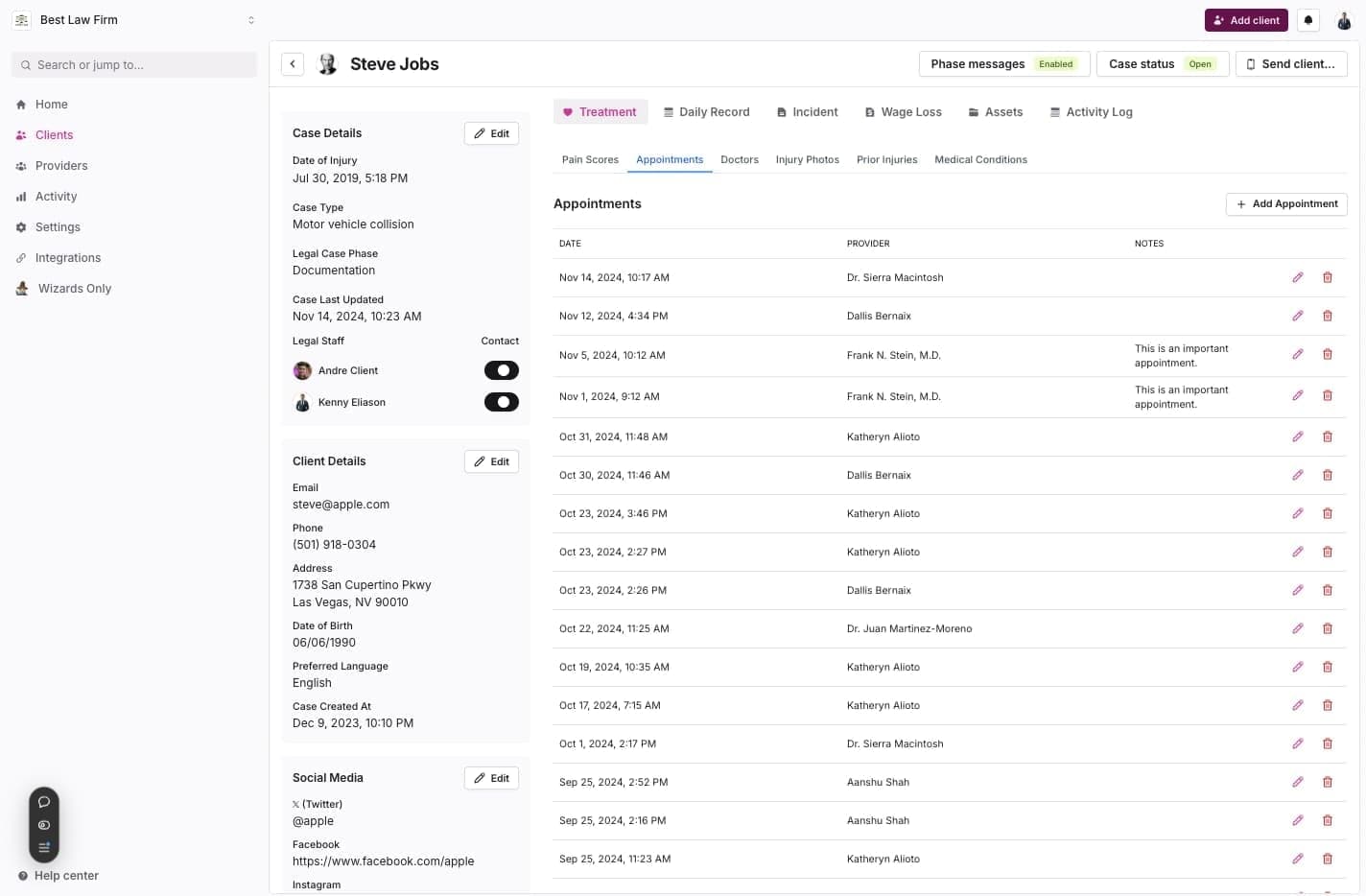
The pattern that works: AI does first-pass extraction into a structured timeline; paralegal audits the timeline against the source PDFs; attorney sees a clean chronology instead of a box of records. The time savings compound on complex cases with multiple providers.
3. Demand letter drafting
More nuanced than the vendor pitches suggest. AI can produce a competent first draft of a demand letter from a facts summary, a liability theory, and a damages breakdown — saving 1-2 hours per demand. What it cannot do is judge your leverage, tune the tone to a specific adjuster, or know which arguments to front-load based on what the insurance carrier has historically paid for.
The firms getting real value have treated AI demand drafting as “draft faster, then spend the saved time sharpening the argument.” Not “press button, send demand.” The attorneys who use AI as a full replacement are the ones whose demands get lowball responses.
See AI demand letters for personal injury cases for a deeper breakdown of where the draft-to-send workflow usually breaks.
4. Client communication
Plaintiff firms live or die by client communication quality. AI shines at the mechanical layer: drafting case status updates, generating FAQs from a client's specific situation, translating legal concepts into plain English, handling first-response messages during off-hours.
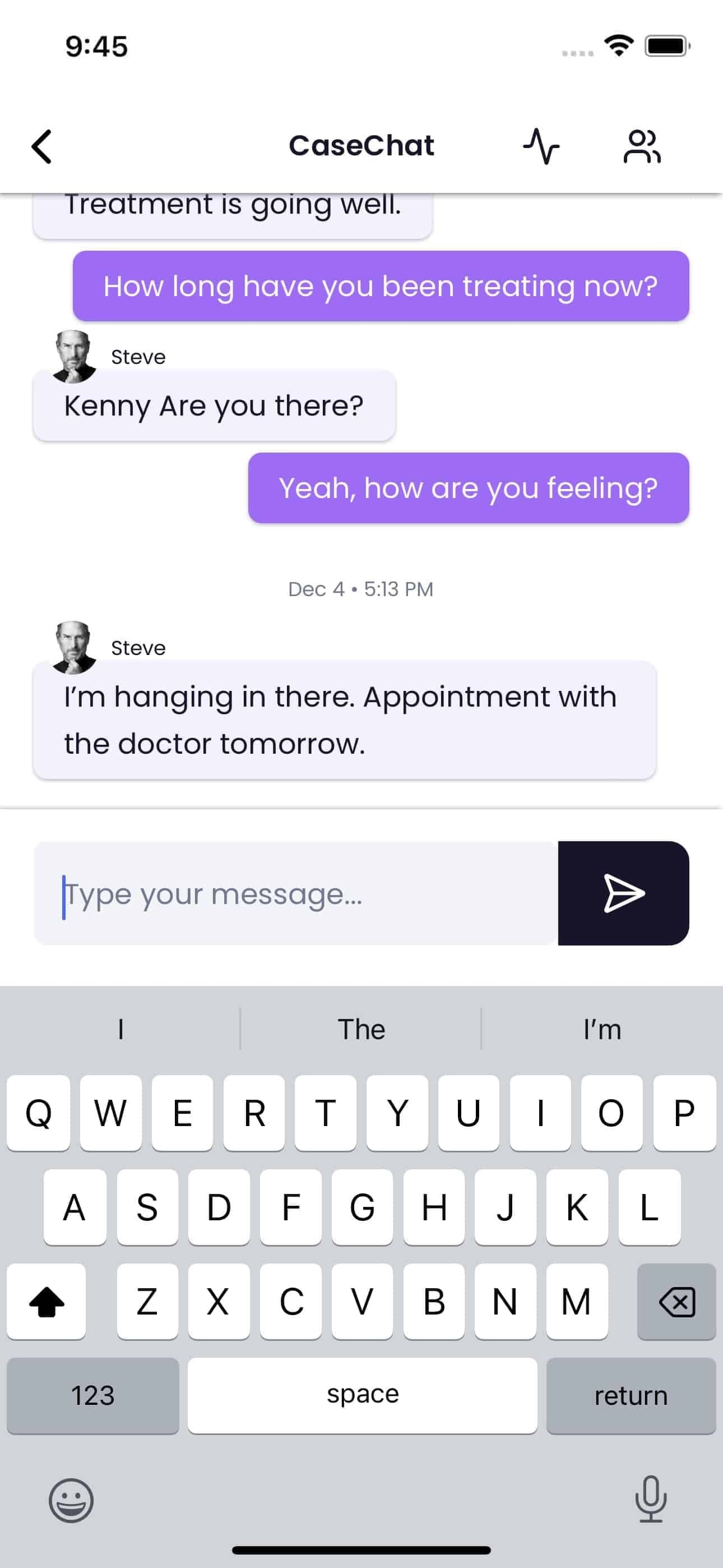
The payoff is retention and reviews. Firms that invest in consistent, responsive client comms report measurably higher Google review volume and lower pre-settlement client churn. AI makes that level of responsiveness feasible at scale without doubling the paralegal headcount.
5. Deposition prep
Quietly becoming a real time-saver. Feed in the complaint, answers, and key records; ask for a deposition outline targeting specific factual disputes. The AI produces a solid starting framework — exhibits to ask about, timeline gaps to probe, admissions you want on the record.
The attorney still runs the depo, obviously. But the 2-3 hours of outline prep become 45 minutes of outline review and refinement. On a firm with a high depo volume, that's a full paralegal-equivalent of capacity recovered.
Where AI is still losing
Anything that requires judgment about a specific client
Settlement authority. Choosing whether to accept or counter. Deciding whether to file suit or continue negotiating. Triaging which case in a pre-litigation portfolio gets attention first. These are judgment calls informed by relationships, firm capacity, adjuster history, and case-specific leverage. AI will confidently produce an answer; it will not reliably produce the right one.
Keep these firmly on the attorney's side of the line and don't let vendor pitches nudge you otherwise.
Court filings with any complexity
Motions, briefs, anything that has to stand up to opposing counsel and a judge. The risk isn't that AI can't draft competently — it can. The risk is hallucinated citations, subtly wrong standards of review, or arguments that read fine but don't map to the jurisdiction. You will get sanctioned. Firms already have been.
Use AI for research, outlining, and first-pass drafting on routine discovery responses. Do not use it for anything that's filed without line-by-line review against primary sources.
Initial liability theory on unusual cases
A standard soft-tissue rear-end collision? AI can produce a serviceable theory. A products liability case with an obscure defect theory or a premises case with an unusual duty-of-care question? The models default to textbook answers and miss the case-specific angles that make or break the demand. This is still an attorney job.
AI is not going to transform a plaintiff firm on its own. What it does is compress the mechanical parts so your attorneys spend more of the day on the non-mechanical ones.
How to pick AI tools that actually help
The firms getting durable value from AI share a few patterns:
- Integration over novelty. A tool that plugs into your existing case management system and works inside the attorneys' daily workflow beats a standalone tool that's technically more capable but lives in a separate tab. The second tool gets used twice and abandoned.
- Explainability first. Every AI output should be traceable back to its source. “The AI said so” is not a defensible answer in any litigation setting. If a tool can't show you which documents, paragraphs, or fields it used to produce an answer, it's not production-ready.
- Attorney-in-the-loop defaults. Tools designed to augment decisions, not replace them. If a tool positions itself as “the AI that handles [X] for you,” assume the vendor hasn't thought carefully about failure modes.
- Pricing that scales with value, not seats. Plaintiff firm economics don't tolerate per-seat pricing that punishes you for having more people working on more cases. Look for usage-based or case-based pricing.
The honest bottom line
AI is not going to transform a plaintiff firm on its own. What it does is compress the mechanical parts of the practice — intake triage, records extraction, first-draft writing, status updates — so that the attorneys and experienced paralegals spend more of their day on the non-mechanical parts: settlement strategy, client relationships, depositions, and the handful of judgment calls per case that actually determine outcomes.
Firms that treat AI as “replace the human” get burned. Firms that treat it as “compress the boring” end up with more cases moving faster through their pipeline, with the same team.
That's the bet worth making in 2026. Everything else is demo-ware.